












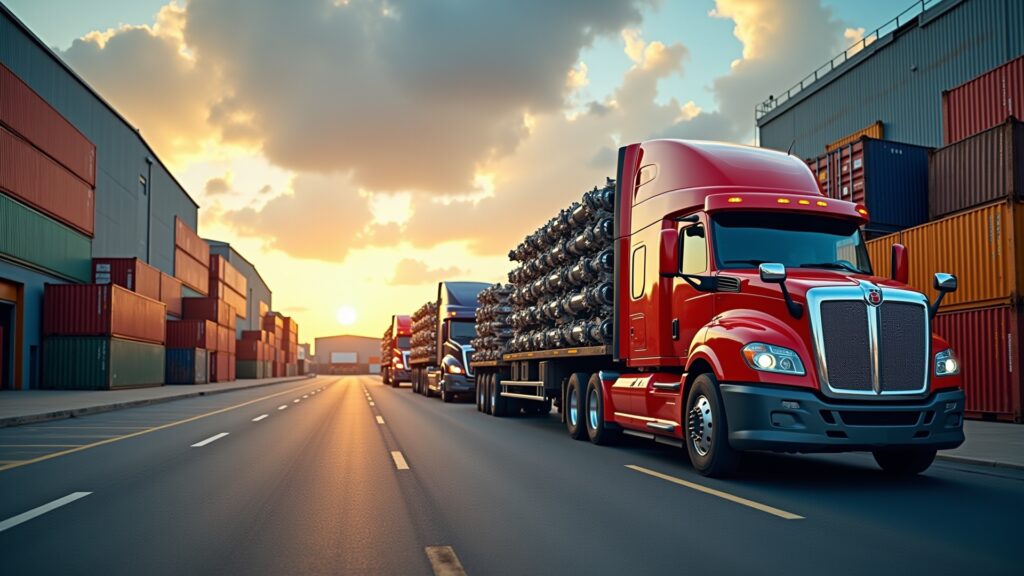
As a leader in the automotive industry, you’re acutely aware that every element in your supply chain and production line impacts your business’s bottom line and future strategy. The unfolding urea shortage in India is no longer just a matter for the agricultural sector; it poses a critical threat to your automotive logistics and supply chains—especially for diesel truck fleets that are the backbone of freight and goods distribution across the country. This scarcity exposes vulnerabilities you cannot afford to ignore, particularly as India aims to establish itself as a global manufacturing and export powerhouse.
Why This Matters to You
This isn’t merely a supply inconvenience—it directly challenges your operational compliance and efficiency. Diesel trucks employing urea-based Selective Catalytic Reduction (SCR) systems are mandated to meet Bharat Stage VI emission norms, making urea indispensable. Without it, you risk immobilized fleets, disrupted supply chains, delayed deliveries, and a cascading effect on your manufacturing and exports. Understanding this dynamic is crucial for business continuity, strategic planning, and mitigating future risks.
The Urea Shortage and Its Immediate Impact
Urea serves as a chemical reagent essential for SCR systems that reduce nitrogen oxide emissions in diesel engines. With a shortage looming, your diesel truck fleet’s ability to operate in emissions compliance is severely compromised. The repercussions are severe: halt freight movements, stall raw material supply to your manufacturing plants, delay finished goods distribution, and destabilize the automotive ecosystem that depends on these logistics.
Key Strategic and Industry Implications
OEMs and the Auto Component Ecosystem
For you as an OEM or auto component manufacturer, this disruption means raw material inflows can be delayed, jeopardizing production schedules. Finished goods face shipment blockades, risking delivery failures to dealerships and export partners. The crisis underlines how single-point dependencies on chemical inputs like urea can magnify supply chain fragility.
Localisation and Supply Chain Resilience Imperatives
This shortage sharpens the focus on your localisation strategy. Diversifying and securing multiple sources for critical consumables must become integral to your supply chain blueprint. Simultaneously, it urges innovation in adopting alternative technologies or fuel systems that reduce exposure to vulnerabilities tied to single chemical dependencies.
Policy’s Role in Stabilization and Future Readiness
You must recognize that government policies will be critical in navigating these challenges. Proactive policy support to stabilize urea supply, incentivize electric and hybrid vehicle technology, and streamline global trade can mitigate disruptions and strengthen India’s automotive export competitiveness.
Strategic Perspective for Industry Leadership
“The real edge is not only in building vehicles, but in controlling the technology, supply chain, and customer experience behind them.” This shortage serves as a strategic inflection point, urging you to accelerate electrification initiatives and embed robust risk management practices into your core business strategy. Businesses that navigate this inflection with agility will secure sustainable growth despite fluctuating regulatory and market landscapes.
Practical Takeaways for Industry Leaders
- Evaluate your supply chain’s chemical input dependencies beyond traditional components; urea dependency is a critical example.
- Develop contingency plans for logistics disruption, including alternate transportation strategies and routes.
- Accelerate investments in EV and hybrid vehicle technologies to reduce reliance on fuel-related chemical consumables.
- Engage with policymakers and industry bodies advocating for secure urea supply chains and supportive regulatory frameworks.
- Monitor global trade policies affecting chemical imports which influence cost and availability.
- Explore collaborative partnerships for localising critical chemical production or alternative emission compliance technologies.
Risks and Challenges Ahead
The urea shortage underscores a fundamental risk: overreliance on singular supply sources creates vulnerability not just in production but in broader logistics. Additionally, until alternative technologies mature, your fleet’s compliance with emission norms remains fragile. Managing costs amid scarcity and mitigating the risk of stalled supply chains require robust strategic foresight.
What You Should Watch Next
- Government interventions or policy updates aimed at urea supply stabilization.
- Progress in electrification and hybrid vehicle adoption metrics within the commercial transport segment.
- Innovations in emission reduction technologies that remove or reduce dependency on urea-based SCR systems.
- Developments in international trade relations impacting chemical imports for automotive manufacturing.
Conclusion
The India urea shortage’s impact goes well beyond agriculture—it has become a strategic challenge with far-reaching reverberations for your automotive logistics and supply chains. In a market pushing towards global competitiveness and manufacturing excellence, these vulnerabilities pose real threats that demand your immediate attention. You need a coordinated approach that marries operational resilience, policy advocacy, and technological innovation to safeguard the long-term sustainability and profitability of your automotive ecosystem.
“In the automobile industry, speed is valuable — but strategic timing creates lasting advantage.” This moment invites you to rethink dependencies, double down on localisation, and accelerate your electric transition to future-proof your business in an evolving market landscape.