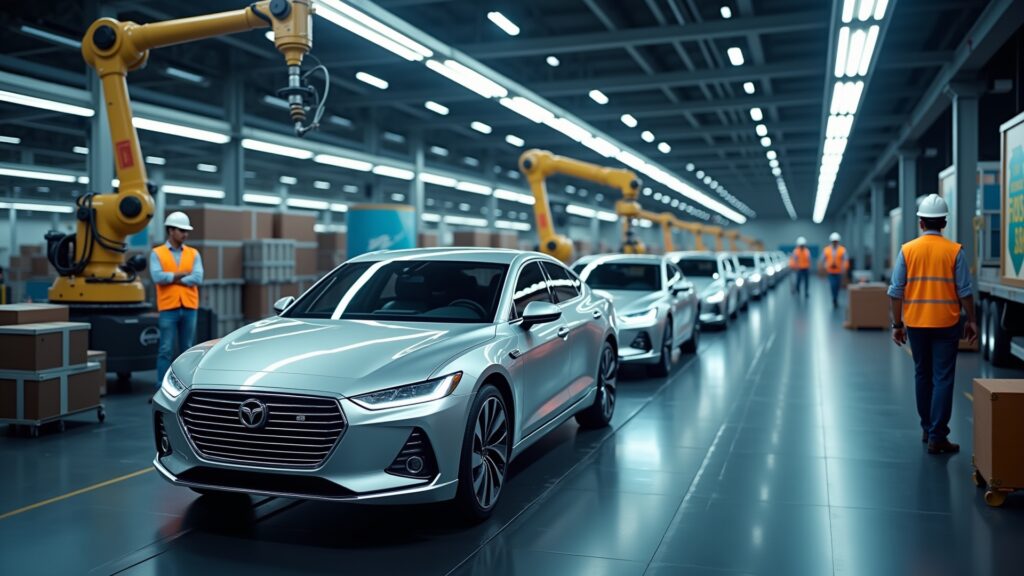










The ongoing geopolitical tensions stemming from the Iran conflict pose a critical challenge to India’s automotive manufacturing ecosystem. As you navigate decisions that affect production, supply chains, and strategic investments, understanding the ripple effects of this conflict on India’s auto sector becomes indispensable. The intricate dependencies on global raw materials and energy supplies mean that disruptions you may perceive as distant can swiftly translate into localized manufacturing hurdles and cost escalations.
Why This Matters to You and Your Automotive Business
If you are a leader within India’s automotive space—whether an OEM executive, supplier, investor, or policymaker—you must reckon with the strategic vulnerabilities the Iran conflict exposes. Rising oil prices and constrained shipping routes increase your operational costs and threaten the reliability of inputs essential to manufacturing vehicles, including electrified models. Moreover, your ambitions around localisation and export growth face fresh headwinds. This is not merely a short-term price shock but a call to reassess supply chain resilience and strategic sourcing policies to protect your business profitability and growth trajectory.
The Current Landscape: What the Iran Conflict Means for Indian Auto Production
The Iranian conflict primarily disrupts energy markets and international shipping lanes—two critical arteries for India’s automotive manufacturing. India’s dependence on petrochemical derivatives, raw materials, and connected logistics means that constrained oil supplies elevate fuel costs and, by extension, the prices of numerous automotive inputs and transportation. These increased costs ripple through your complex network of Tier 1 and Tier 2 suppliers, raising the production cost base for both conventional vehicles and the increasingly significant electric and hybrid segments.
Key Business and Market Implications
India’s automotive sector stands at a pivotal crossroads amid aggressive localisation drives, electrification strategies, and export-led ambitions. However, higher input costs driven by the Iran conflict create a delicate balancing act for you as an OEM or supplier: maintaining competitive pricing while absorbing or mitigating rising expenses.
- Profitability Pressure: Increased raw material and logistics costs compress margins, particularly for export-focused manufacturers targeting cost-sensitive global markets.
- Supply Chain Fragility: Supply disruptions place strain on availability and timing for critical components used in both conventional internal combustion engine (ICE) and electric vehicle (EV) production.
- Export Competitiveness Risk: Elevated costs challenge India’s positioning as a cost-effective global auto manufacturing hub, potentially impacting export volumes and international market share.
- Electrification Challenges: The EV transition relies heavily on stable supplies of battery materials and robust energy infrastructure, both threatened by fluctuations caused by geopolitical instability.
Strategic Insight: Building Resilience Amid Geopolitical Uncertainty
Facing these disruptions, your strategic response should centre on enhancing supply chain agility and de-risking your manufacturing ecosystem. Consider the following:
- Diversification of Supply Chains: Reducing reliance on conflict-affected regions by sourcing critical materials and components from alternative geographies or bolstering domestic production capabilities.
- Accelerated Localisation: Investing in homegrown raw material extraction and processing, plus localised component manufacturing, will help shield your operations from volatile global markets.
- Energy Transition Focus: Prioritising renewable energy sources within your manufacturing processes and advancing battery recycling initiatives to limit exposure to fossil fuel price shocks.
- Policy Advocacy and Alignment: Collaborating with policymakers to shape frameworks that support strategic stockpiling, emergency logistics corridors, and incentives for supply chain resilience.
“In the automobile industry, speed is valuable — but strategic timing creates lasting advantage.”
“The real edge is not only in building vehicles, but in controlling the technology, supply chain, and customer experience behind them.”
Practical Takeaways for Auto Industry Leaders
- Monitor geopolitical developments closely and incorporate scenario planning into your operational risk management.
- Strengthen relationships with alternative suppliers and invest in multi-source contracts to mitigate supply interruptions.
- Accelerate R&D efforts focused on alternative materials and design flexibility to reduce dependency on vulnerable inputs.
- Leverage digital tools for enhanced supply chain visibility to anticipate disruptions early and respond proactively.
- Engage with industry bodies and government forums to influence supportive policies and collaborate on resilience initiatives.
Challenges and Risks to Navigate
While strategic diversification and localisation present promising pathways, they are not without hurdles. Scaling domestic production of critical materials requires significant capital investment and innovation capacity, which you must manage carefully against short-term operational needs. Additionally, geopolitical tensions can evolve unpredictably, making sustained policy support and agile managerial responses essential. For businesses with international exposure, currency fluctuations and export compliance complexities might also magnify pressure on margins.
What You Should Watch Next
- Government initiatives enhancing local raw material and battery component production capabilities.
- Shifts in global oil prices and their direct impact on logistics and production costs.
- Emerging partnerships or joint ventures aimed at supply chain redundancy and EV ecosystem integration.
- Regulatory changes impacting import duties, export incentives, and energy usage in manufacturing.
Conclusion: Positioning India’s Automotive Sector for Resilient Growth
As you assess the Iran conflict impact on India’s auto production, it becomes clear that resilience through localisation, supply chain innovation, and energy transition is non-negotiable. Your strategic decisions today will determine not only production continuity but also India’s stature on the global automotive stage. By proactively addressing these geopolitical challenges with agility and foresight, you ensure your enterprise and the broader industry emerge stronger, more competitive, and primed for long-term success.
“When manufacturing strength, policy clarity, and market demand align, automotive growth becomes far more scalable.”