








As a decision-maker in the automotive industry, you need to watch Renault’s latest strategic move closely. The company’s commitment to a dual-platform strategy combined with plans to launch seven new models by 2030 reflects more than just a product expansion; it represents a significant pivot toward India’s emerging role as a critical hub in the electric vehicle (EV) and automotive manufacturing landscape. This move is a direct signal to you—whether you are an OEM leader, supplier, investor, or policymaker—about how to navigate and capitalize on the country’s evolving auto ecosystem.
Why Renault’s Strategy Matters to You
You are operating in an increasingly complex and competitive global automotive market, and India has come unmistakably into focus as a growth frontier. Renault’s dual-platform approach addresses the very challenges and opportunities you face: how to balance cost-efficiency, localization, and technological adaptability while positioning for the EV-driven transformation ahead. Their strategy isn’t just about vehicles; it’s about restructuring manufacturing, supply chains, policy alignment, and market offerings—all areas that will influence your strategic decisions and investment priorities going forward.
What Is Happening?
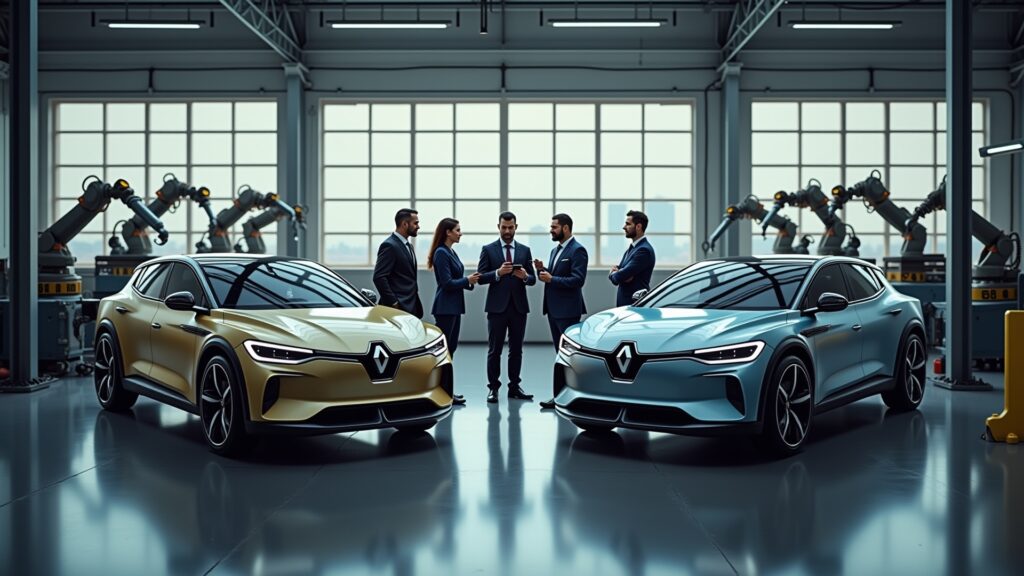
Renault is preparing to build two distinct platforms in India, a move that enables them to produce both electric and hybrid vehicles alongside traditional combustion engine models more effectively. By 2030, the company intends to roll out seven new models tailored to different market segments, with a significant push towards electrification. The dual-platform framework is designed to offer flexibility and scale, cutting down production costs, reducing time-to-market, and enhancing localization — essential components in India’s highly dynamic automotive industry.
Key Business and Market Impacts
This dual-platform strategy aligns perfectly with India’s policy environment, which increasingly incentivizes EV adoption and local manufacturing. As you consider your own business positioning, note that Renault’s expanded portfolio will help it address a wider consumer base looking for sustainable mobility solutions, both domestically and through exports.
For suppliers and component manufacturers, this is a clear call to adapt to growing demand in EV-specific parts, such as batteries, motors, and electronic control units. Local sourcing will become even more critical, making partnerships with OEMs like Renault a gateway to long-term growth. Investors should also take note of how Renault’s strategic play may improve operational resilience, helping the company navigate supply chain disruptions and increasingly stringent regulatory frameworks.
Strategic Insights: Why This Signals a New Phase for Growth
“In the automobile industry, speed is valuable — but strategic timing creates lasting advantage.” Renault’s timing and strategic design echo this principle perfectly. By rolling out a dual platform in an evolving market like India, they highlight how OEMs can simultaneously target premium and mass segments, leverage technology transfer, and embrace manufacturing localization all under one strategic umbrella.
This approach also exemplifies navigating supply chain complexities with flexibility—allowing Renault to mitigate risks stemming from fluctuating component availability or policy shifts. The synchronization with India’s expanding battery supply chain and charging infrastructure reflects a holistic ecosystem play, not merely a product-centric strategy.
Practical Takeaways for Automotive Leaders
- Monitor India’s evolving regulatory incentives: Government policies continue to favor electrification and local sourcing—aligning your strategy with these will be essential.
- Prioritize platform flexibility: Develop scalable and modular vehicle platforms that accommodate hybrid and electric variants to address broad market demands.
- Strengthen local supply chains: Partner with EV component manufacturers and innovate to reduce import dependency, ensuring resilience.
- Invest in charging and battery ecosystems: Consider strategic alignment with infrastructure development to support your electric product portfolio.
- Leverage export potential: Use India as a manufacturing hub not only for domestic sales but for growing export markets.
Expert Perspective
“The real edge is not only in building vehicles, but in controlling the technology, supply chain, and customer experience behind them.”
“When manufacturing strength, policy clarity, and market demand align, automotive growth becomes far more scalable.”
Risks and Challenges Ahead
While the dual-platform strategy offers compelling advantages, you must also assess potential risks. India’s EV market, though promising, remains price-sensitive, and consumer adoption rates will require sustained government support and infrastructure development.
Moreover, execution challenges in maintaining two distinct platforms without inflating costs or diluting quality require disciplined operational oversight. Suppliers must innovate and scale rapidly to meet Renault’s and others’ evolving requirements, which may strain existing manufacturing capacities.
What You Should Watch Next
Keep an eye on how Renault’s new models perform in Indian and export markets, as well as regulatory updates on EV incentives. The pace at which India’s charging infrastructure and battery supply chain scale will also determine how fast this dual-platform approach can translate into competitive advantage. Finally, watch for supplier partnerships and localization moves that will underpin Renault’s ambitions and influence the broader auto component ecosystem.
Conclusion: A Strategic Lens on Renault’s Dual-Platform Strategy and the EV Push in India
Renault’s dual-platform strategy is far more than just a product roadmap; it is a strategic exemplar for you to consider in the context of India’s ongoing automotive transformation. By marrying production flexibility with a targeted EV push, Renault positions itself to capitalize on India’s emergent role as a manufacturing and export powerhouse while navigating emerging policy and market realities. For automotive leaders, investors, and suppliers, understanding and adapting to this dual-platform approach will be crucial for long-term competitiveness in an increasingly electrified, localized, and software-driven automotive world.