












The unfolding conflict in the Middle East poses a significant strategic challenge for your automotive business if you are involved in India’s rapidly evolving industry. Not just a distant geopolitical issue, this regional instability directly threatens your production timelines, supply chain continuity, and operational cost structures. As India positions itself as a global automotive manufacturing hub, the ripple effects from the Middle East conflict compel you to rethink your sourcing, manufacturing, and export strategies with renewed urgency.
Why This Matters to You
If your business—whether as an OEM leader, supplier, investor, or policymaker—is vested in the Indian automotive ecosystem, you must recognize the gravity of these developments. The Middle East conflict impacts energy availability, logistics routes, and raw material flows critical to your production and profitability. The industry’s ambitions for localisation and export growth hinge on stable supply chains and cost efficiencies that this turmoil threatens to unsettle. Your decision-making in the coming months will determine how resilient and competitive your operations remain amid mounting geopolitical uncertainty.
What Is Happening
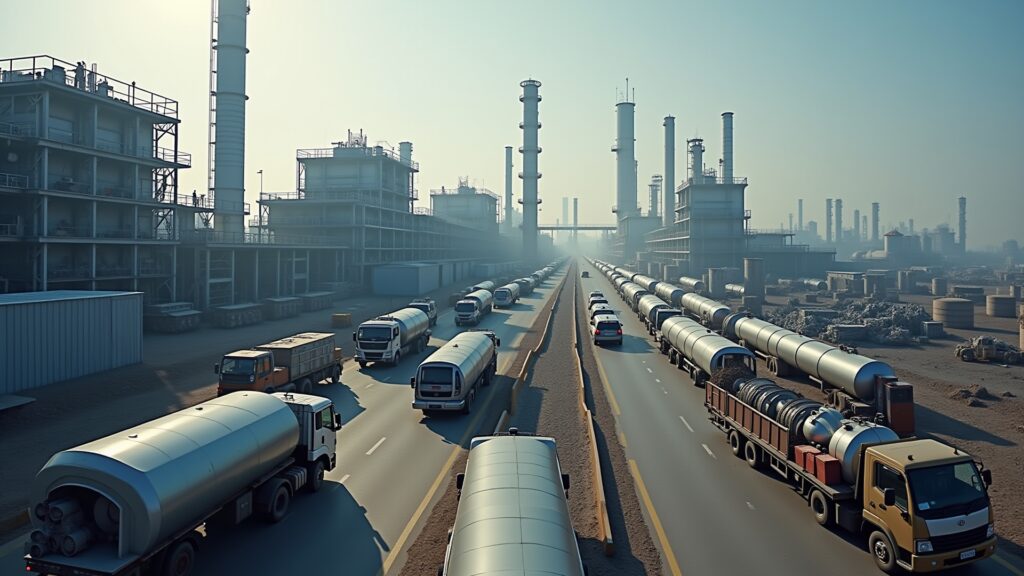
The intensifying Iran war and surrounding regional tensions are creating immediate bottlenecks in trade and resource channels essential to India’s auto manufacturing. Many key raw materials and components transit via Middle Eastern ports or depend on energy supplies sourced from West Asia. Disruptions here can slow production lines, inflate costs, and reduce margin flexibility. Alongside this, shipping routes face unpredictability, delaying deliveries critical for both domestic vehicle assembly and export commitments.
Key Business and Automotive Industry Impacts
For your OEM operations and tier-1 suppliers, this situation highlights several strategic vulnerabilities:
- Supply chain exposure: High dependency on Middle Eastern energy and logistics amplifies risk.
- Cost volatility: Raw material prices and freight rates are likely to fluctuate, pressuring profitability.
- EV and hybrid transition: Rising demand for batteries and semiconductors necessitates more stable, local sourcing to avoid disruption.
- Export challenges: Geopolitical instability threatens trade routes, complicating customs and delivery timelines.
Simultaneously, the Indian government’s push for Atmanirbhar Bharat (self-reliance) and export competitiveness gains new urgency as domestic localisation becomes not just policy preference but a strategic imperative.
Strategic Insight: Building Resilience Through Localisation and Diversification
The real strategic pivot lies in reducing your vulnerability by reshaping supply chain and production paradigms. This means accelerating investments in indigenous capacity for critical components—battery materials, semiconductors, auto parts—and energy alternatives to lessen reliance on unstable external sources. Consider alternatives for logistics, such as diversifying away from sole dependence on Middle Eastern shipping routes and exploring multi-modal transport opportunities within India and neighboring geographies.
“In the automobile industry, speed is valuable — but strategic timing creates lasting advantage.” Align your production and supply strategies with deeper localisation and supply base diversification to not only weather current turbulence but also position for future growth.
Practical Takeaways for Industry Leaders
- Assess your supply chain dependencies: Identify choke points related to Middle Eastern energy and material sourcing and build redundancies.
- Invest in local sourcing: Prioritize partners and suppliers who strengthen your Atmanirbhar Bharat credentials.
- Engage with policymakers: Advocate for supportive trade facilitation, energy diversification, and export ease amid geopolitical complexities.
- Navigate production planning cautiously: Factor geopolitical risk into your FY27 forecasts, balancing expansion with operational flexibility.
- Explore innovation: Leverage software-defined vehicle technologies and connected mobility to create differentiated value despite upstream challenges.
Expert Perspective
“The real edge is not only in building vehicles, but in controlling the technology, supply chain, and customer experience behind them.”
“When manufacturing strength, policy clarity, and market demand align, automotive growth becomes far more scalable.”
Risks and Challenges to Monitor
You cannot ignore the potential escalation in trade frictions or energy price shocks that may compound your cost pressures. Delays in securing alternative supply lines or localisation progress could stall your competitive momentum. Moreover, export-dependent players might face tighter customs and regulatory scrutiny as governments react to instability, affecting shipment timelines and profitability.
What You Should Watch Next
- Shifts in Indian government policies on localisation incentives and trade facilitation amid ongoing Middle East tensions.
- Global energy prices and how they impact component manufacturing costs for your EV and hybrid vehicle lines.
- Developments in alternative logistics corridors and potential partnerships regionally.
- Progress in domestic semiconductor and battery material production capabilities aligning with your supply chain needs.
Conclusion: Navigating Turbulence with Strategic Agility
The Middle East conflict impact on India automotive industry is more than a headline—it’s a call to action for you as a leader in this ecosystem. Navigating this turbulence demands strategic agility: leveraging localisation, cultivating supply chain resilience, and aligning closely with policy direction to secure your operational and export ambitions. The industry’s future competitiveness hinges on your ability to innovate and adapt amid an unprecedented global challenge that redefines how automotive production and supply chains must function in a volatile world.