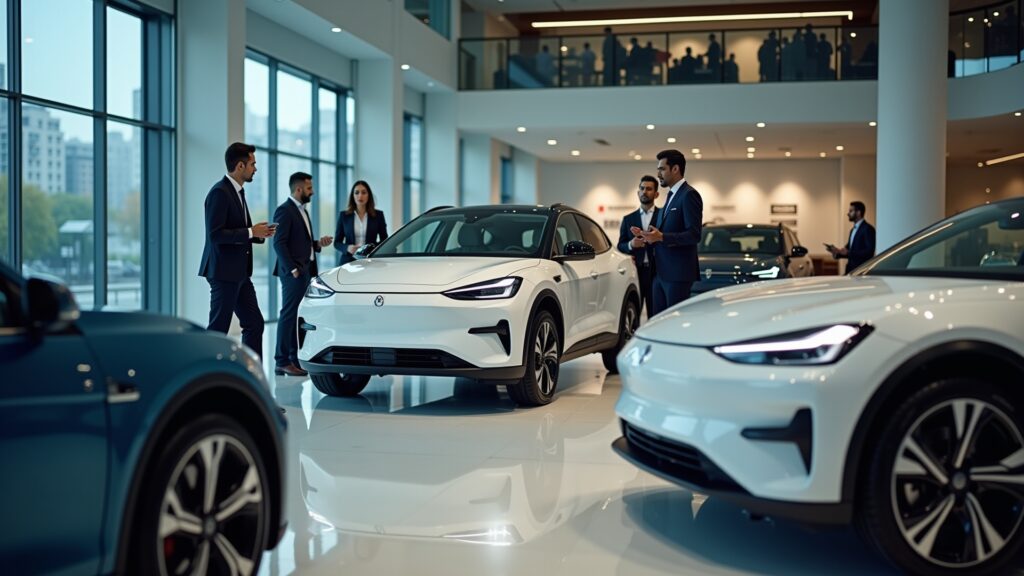










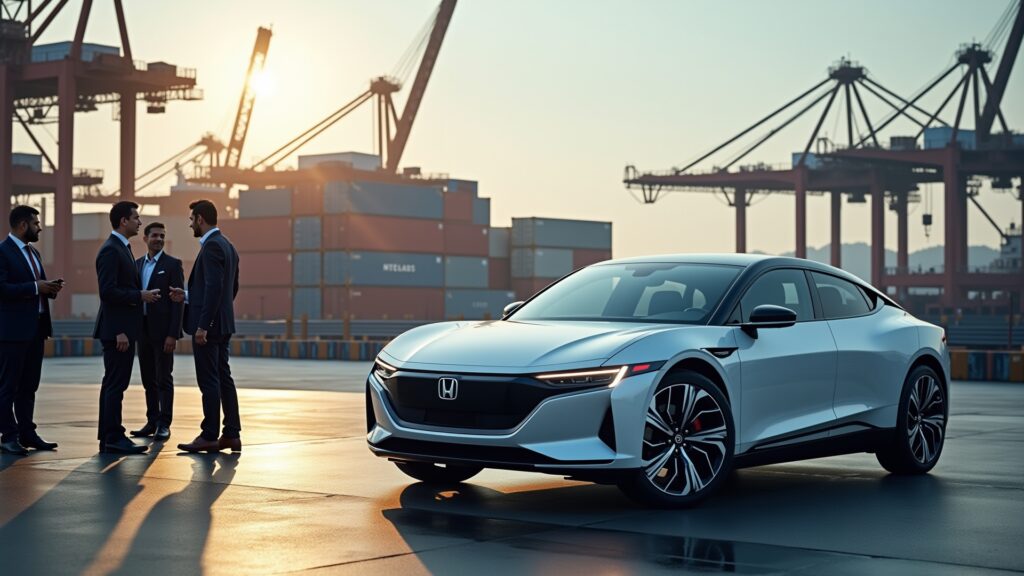
You stand at a pivotal juncture in the automotive world as Honda announces its exit from the South Korean passenger car market by the end of 2026. This decision is not merely a retreat from one geography but a strategic repositioning that you must closely examine—especially if your business, investments, or strategies intersect with India’s automotive industry or the global automotive ecosystem.
Understanding Honda’s recalibration sheds light on the harsh realities and evolving imperatives legacy OEMs face amidst intensifying competition, rapidly shifting consumer preferences, and the electric vehicle (EV) revolution. What does this mean for your decisions, your market focus, and your opportunities? Let’s explore.
Why This Matters to You
As an automotive leader, investor, policymaker, or supplier, Honda’s South Korea exit impacts more than that regional market. It signals a broader warning about the necessity of aligning market presence with profitability, advanced localization strategies, and future-ready technology investments. You should view this decision as a case study in strategic agility.
India, in particular, emerges as a crucial game-changer in Honda’s global playbook. The country’s expanding middle class, aggressive governmental policies promoting localization and exports, and rising EV adoption create a fertile landscape for OEMs to thrive. If you are involved in India’s automotive ecosystem, Honda’s pivot reinforces the market’s rising stature — and your need to adapt alongside.
What Is Happening: Decoding Honda’s Strategic Reorientation
South Korea’s passenger car market remains one of the most challenging for foreign automakers. Dominated by Hyundai and Kia, domestic brands boast strong consumer loyalty and expansive distribution networks, leading to intense competition for market share and profitability.
Honda’s decision to exit signals a pragmatic response to these pressures and a redirection of resources toward markets with more strategic upside. India is central in this strategy due to its unique combination of scale, government incentives, and evolving consumer demand—especially for EVs and hybrids.
Key Business and Market Impact
Honda’s withdrawal underscores the challenges foreign OEMs face in saturated or highly competitive markets without a clear competitive differentiation. For you, this should prompt a reassessment of market commitments, especially in regions where localization and tech transitions are not advancing swiftly.
In India, Honda’s continued investments align tightly with national policies promoting Make in India initiatives, export-led growth, and technology-driven innovation. This synergy presents an opportunity to solidify India as a manufacturing and export hub for hybrid and electric vehicles. You should evaluate how this reshaping of Honda’s footprint might influence local component ecosystems, supplier partnerships, and export dynamics.
Strategic Insight: The India Advantage and EV Transition
India’s automotive policy incentives strengthen the business case for intensified local manufacturing. Coupled with the government’s increasing support for EV infrastructure and hybrid vehicle promotion, you witness an environment conducive to scaling up competitive manufacturing operations—an environment Honda is clearly leveraging. This strategy not only optimizes cost structures but also reinforces Honda’s ability to adapt to regulatory shifts and consumer trends.
“The real edge is not only in building vehicles, but in controlling the technology, supply chain, and customer experience behind them.” This shift towards a tech-first and localized supply approach is reshaping the competitive landscape, and those OEMs aligning with these principles are setting benchmarks for others.
Practical Takeaways for Automotive Business Leaders
- Localization is Paramount: Accelerate local manufacturing and supplier development to remain profitable amid global supply chain uncertainties.
- EV and Hybrid Focus: Prioritize investments in electrification and hybrid platforms aligned with government incentives and evolving consumer preferences.
- Market Prioritization: Continuously analyze market viability beyond sales volumes—consider profitability, regulations, and ecosystem readiness.
- Export Potential: Leverage India’s export-oriented policies to build manufacturing centers that serve global markets.
- Supply Chain Resilience: Build agile, resilient supply chains capable of adapting to policy changes and trade volatility.
Expert Perspective
“In the automobile industry, speed is valuable — but strategic timing creates lasting advantage.”
“When manufacturing strength, policy clarity, and market demand align, automotive growth becomes far more scalable.”
“Agility in adapting to local market conditions and technological shifts is no longer an option, but a necessity for sustained success.”
Risks and Challenges to Consider
This reorientation is not without hurdles. For Honda and any OEM watching closely, the exit from South Korea exposes risks related to brand perception, loss of market diversification, and dependency on fewer growth markets. For your business, overreliance on a single geography can amplify exposure to policy shifts or economic downturns.
Additionally, the rapid pace of EV adoption requires constant innovation in battery technology, charging infrastructure, and connected vehicle software—areas where OEMs must invest with discipline and foresight. Failure to keep pace risks eroding competitive positioning, regardless of market size.
What You Should Watch Next
- India’s EV Policy Evolution: Monitor regulatory changes, incentives, and infrastructure rollouts impacting hybrid and electric vehicle adoption.
- Honda’s India Expansion Plans: Track new manufacturing investments, technology partnerships, and export developments.
- Competitive Responses: Observe how other OEMs react to Honda’s strategic shift, especially in emerging markets.
- Supply Chain Innovations: Notice advances in localization, battery sourcing, and software integration that could redefine operational efficiency.
Conclusion: Aligning Strategy with Global Transformations
Honda’s South Korea exit and renewed focus on India crystallize an imperative for automotive stakeholders—you cannot afford complacency in market prioritization and strategic investments. The interplay between localization, electrification, and export-driven growth signals India’s rise as a global automotive hub, ripe with opportunity for manufacturers, suppliers, and investors alike.
By adapting to these dynamics—embracing technological advancement, supply chain resilience, and policy alignment—you place yourself and your business on a trajectory aligned with future automotive market realities.
Understanding the “Honda South Korea exit impact on India auto industry” is more than tracking a headline; it is about seizing insights that sharpen your strategic vision and operational execution in a profoundly changing automotive era.