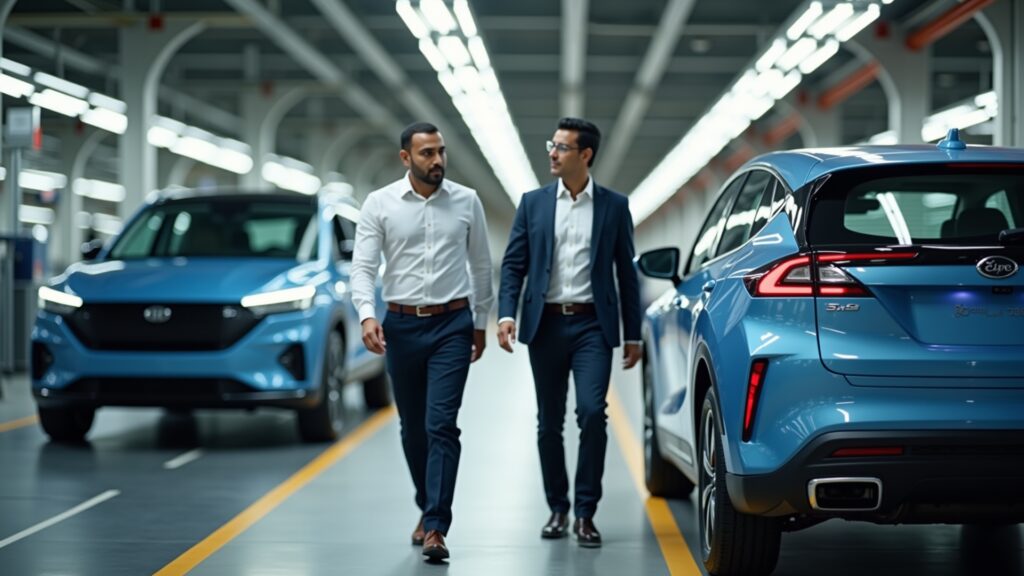












You stand at a pivotal moment in India’s automotive story. Maruti Suzuki’s announcement of a ₹35,000 crore investment in a new manufacturing facility, revealed during the high-level PM Modi–Japanese Prime Minister Fumio Kishida summit, is far more than a headline—it is a calculated strategic pivot that will redefine manufacturing scale, localisation, and export ambitions within India’s automotive sector.
Why This Matters to You
As an auto industry leader, investor, or policymaker, you must grasp the significance behind this large-scale commitment. It signals confidence not only in India’s growing market, but also in a cohesive manufacturing ecosystem capable of supporting the transition to electric and hybrid vehicles (EVs), enhancing supply chain resilience, and substantially boosting India’s position in the global automotive supply chain.
This is your call to action: understanding the ramifications of Maruti Suzuki’s strategy and aligning your decisions with emerging localisation trends, technological shifts, and export strategies is critical to safeguarding and scaling your business or investment in India.
What Is Happening
Maruti Suzuki is set to transform its manufacturing footprint with an unprecedented ₹35,000 crore investment, one of the largest by an original equipment manufacturer (OEM) in India’s automotive history. Beyond expanding production capacity, this facility is projected to integrate cutting-edge manufacturing technologies, possibly AI-driven systems, and robust localisation strategies that align with evolving regulatory and market demands.
This move is tightly linked to India’s vision of becoming a global hub for automotive production and exports, and it unfolds amidst a complex backdrop of industry electrification, digital transformation, and supply chain unpredictability.
Key Strategic and Market Impact
Maruti Suzuki’s manufacturing facility announcement isn’t merely about volume—it is about strategic positioning. Here’s why:
- Localisation and Supply Chain Resilience: The facility will significantly enhance localization of components, a pillar for mitigating international supply chain disruptions and for strengthening the domestic auto component ecosystem. This directly feeds into securing smoother, more cost-effective manufacturing processes.
- EV and Hybrid Transition Readiness: With global markets accelerating EV adoption, your investment in infrastructure for EV and hybrid vehicle production transforms risks into opportunities, future-proofing your business against shifting consumer and regulatory landscapes.
- Global Competitiveness and Export Growth: By boosting component localisation and manufacturing scale, Maruti Suzuki dramatically improves its export potential—championing India’s ambition to become a major automotive export powerhouse.
- Technology Integration: The approach likely includes AI-enhanced manufacturing, connected vehicle capabilities, and software-defined vehicle platforms, positioning Maruti Suzuki—and by extension the Indian auto sector—on the cutting edge of automotive innovation.
Strategic Analysis: A Blueprint for Indian Automotive Leadership
Maruti Suzuki’s ₹35,000 crore facility represents more than capital deployment—it is the embodiment of a strategic playbook balancing manufacturing scale, tech innovation, and localisation synergy. This is a clear signal that Indian automotive leadership is embracing a multi-dimensional approach to global competitiveness.
“In the automobile industry, speed is valuable — but strategic timing creates lasting advantage.” This investment represents strategic timing, enabling you to leverage policy environments encouraging localisation and export facilitation, while riding the wave of electrification and digital transformation.
The India-Japan partnership context also opens pathways for technology transfer, joint ventures, and collaborative advancements, which you should view as potential avenues for augmenting your own operational and innovation capabilities.
Practical Takeaways for Auto Leaders and Investors
- Understand Localisation Imperatives: Prioritize partnerships and supply chain strategies that enhance your component localisation to mitigate risk and boost cost competitiveness.
- Invest in EV and Hybrid Capabilities: Assess your readiness and invest in production lines and technologies that align with India’s EV push and evolving consumer demand.
- Leverage Export Opportunities: Monitor regulatory and trade policy developments that facilitate automotive exports, and align your production and market strategies accordingly.
- Explore Collaborative Innovation: Seek joint ventures and technology collaborations prompted by international partnerships, especially in AI, connected vehicles, and software-defined architectures.
Expert Perspectives
“The real edge is not only in building vehicles, but in controlling the technology, supply chain, and customer experience behind them.”
“When manufacturing strength, policy clarity, and market demand align, automotive growth becomes far more scalable.”
Risks and Challenges to Monitor
While the investment promises growth, you must remain conscious of potential hurdles. Supply chain volatility, technological integration complexities, and the evolving EV policy framework require vigilant risk management and agile strategic responses.
Moreover, the competitive landscape will intensify as global and domestic players ramp up localisation and EV investments. Staying ahead demands continuous innovation and adaptability.
What You Should Watch Next
Keep a keen eye on how Maruti Suzuki phases its manufacturing ramp-up, the specifics of localisation percentages achieved, and its partnerships formed under the India-Japan cooperation framework. Tracking regulatory changes and incentives for EV manufacturing and exports is equally crucial.
Market responses, supplier ecosystem developments, and consumer adoption patterns of EV and hybrid models will offer further cues for strategic recalibration.
Conclusion
Maruti Suzuki’s ₹35,000 crore manufacturing facility announcement marks a strategic pivot for not just the company, but for India’s entire automotive ecosystem. This is your blueprint for how large-scale manufacturing investment, robust localisation, and cutting-edge technology adoption can drive resilience and competitive advantage.
Understanding and integrating these trends into your strategy ensures you remain at the forefront of the evolving automotive landscape. For those seeking to capitalize on India’s rise as an automotive manufacturing powerhouse, Maruti Suzuki’s move is a clear, insightful roadmap.